News
As Mythos & Fable Flounder from Feds, Claude Flies on Foundry
Anthropic's newest Claude models are caught up in an unusual access dispute with the U.S. government, but Microsoft is pressing ahead with a more enterprise-focused Claude message: Claude in Microsoft Foundry is now generally available.
That contrast was hard to miss. In a June 29 announcement, Microsoft said Claude in Foundry gives enterprise teams "the production path" they have been asking for: "true frontier model choice, Azure-native controls, simplified procurement, and faster time to value."
The GA release means developers can build with Claude through an existing Azure account, using familiar Azure authentication, billing, networking, governance and data controls. Microsoft said Claude can be accessed through the Messages API, with support for prompt caching, extended thinking and tool streaming. For agentic AI work, Foundry Agent Service can use Claude as the reasoning core for multi-step planning, tool use and task execution across enterprise systems.
As of today, Claude models account for two of the top five when rated by quality on the Foundry leaderboard.
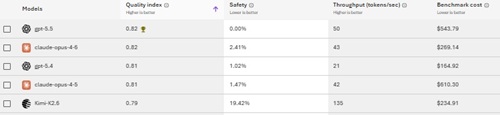 [Click on image for larger view.] 2 of Top 5 on Quality Scale (source: Microsoft).
Microsoft's enterprise pitch is less about raw model novelty than operational fit. The company emphasized that inference is processed in Azure, customers can choose Global or U.S. data zones, Anthropic acts as the data processor and SLA provider, and high-sensitivity workloads can use zero data retention so prompts and completions are not retained by Anthropic after the API call completes.
That makes the announcement notable amid Anthropic's own turbulence around Claude Fable 5 and Claude Mythos 5, which the company introduced with a heavy emphasis on advanced reasoning, coding, scientific work and safeguards for dangerous dual-use domains.
In that launch, access became the story. In a June 12 statement, Anthropic said the U.S. government, "citing national security authorities," had issued an export-control directive suspending access to Fable 5 and Mythos 5 by any foreign national, inside or outside the United States. Anthropic said the "net effect" was that it had to "abruptly disable Fable 5 and Mythos 5 for all our customers to ensure compliance," while access to other Anthropic models was not affected.
Anthropic said it was complying, but pushed back sharply on the rationale, saying it disagreed that "the finding of a narrow potential jailbreak should be cause for recalling a commercial model deployed to hundreds of millions of people." The company also said it believed the action did not follow what it described as a transparent, fair, clear and technically grounded process.
The Fable/Mythos directive also follows an earlier clash between Anthropic and the Trump administration over national security use of Claude. In February, Anthropic said Secretary of War Pete Hegseth had indicated he was directing the Department of War to designate Anthropic a "supply chain risk" after negotiations stalled over two exceptions Anthropic wanted to preserve: "the mass domestic surveillance of Americans and fully autonomous weapons." Anthropic said it supported "all lawful uses of AI for national security" aside from those two exceptions, but added that "No amount of intimidation or punishment from the Department of War will change our position on mass domestic surveillance or fully autonomous weapons." Anthropic said individual and commercial Claude customers would be unaffected, and that any formal designation would apply only to Department of War contract work.
That leaves Microsoft with an enterprise story to tell around Anthropic's AI: not Fable 5 or Mythos 5, but Claude models running inside a platform built around procurement, governance, data residency, monitoring and agent deployment.
For developers, Microsoft highlighted coding, refactoring, debugging, test creation and large-scale development workflows. For agent builders, it cited multi-step reasoning, tool use, planning and task execution. For business teams, it pointed to document-heavy analysis, research synthesis and complex decision support.
The broader message is that frontier-model access alone is no longer enough for enterprise AI. Anthropic's Fable/Mythos episode underscores the fragility of model access when safety, capacity and government oversight collide. Microsoft's Foundry announcement, by contrast, frames Claude as part of a managed Azure production stack -- less flashy than a new model family, but potentially more useful to enterprises trying to move AI agents from experiments into governed deployment.
About the Author
David Ramel is an editor and writer at Converge 360.