News
Google Moves Gemini CLI Into Antigravity CLI as Agent Platform Expands
Google used its ongoing Google I/O event to announce that it is transitioning Gemini CLI into Antigravity CLI, folding its terminal-based AI coding tool into the broader Google Antigravity agent-first development platform.
The company described the move in a Google Developers Blog post published May 19, saying Gemini CLI helped establish the terminal as an interface for agentic tasks but that developer workflows have shifted toward multi-agent systems that can split up work and share a unified backend.
"Gemini CLI proved the terminal could be an incredible interface for agentic tasks, but your needs shifted," Google said in the post. "You now require multiple agents communicating with each other to split up the work and solve complex problems."
The replacement is Antigravity CLI, a terminal experience tied to Google Antigravity 2.0, the company's desktop application and agent-first development platform. Google said Antigravity CLI shares the same agent harness as Antigravity 2.0, so improvements to core agents can apply across the desktop and terminal experiences.
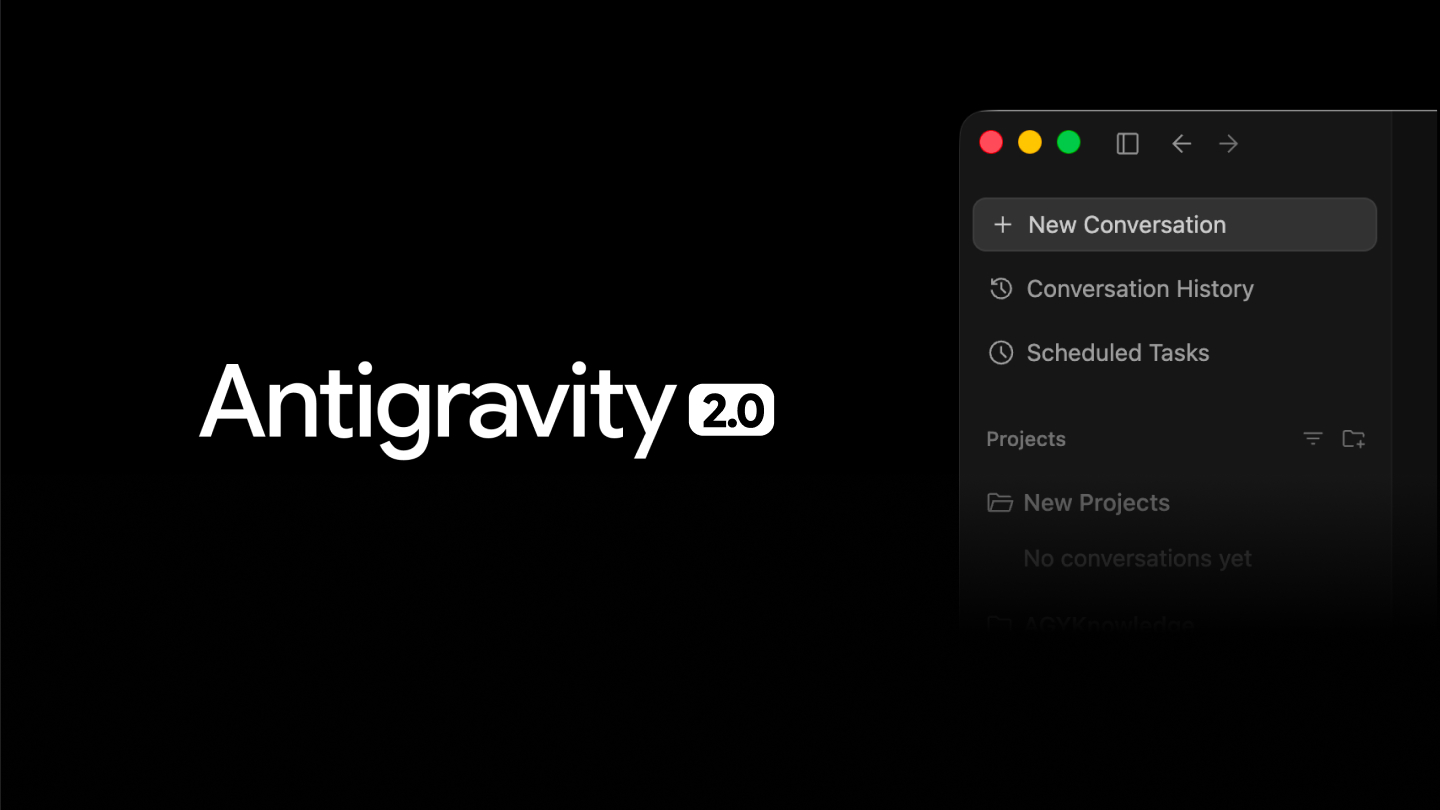 Google Antigravity 2.0 (source: Google).
How Gemini CLI and Antigravity CLI Compare
Gemini CLI was built as a direct terminal interface to Google's Gemini models. Its public GitHub description calls it an open source AI agent that brings Gemini into the terminal, providing lightweight access from a prompt to the model. Google said the project reached "millions of users," more than 100,000 GitHub stars and more than 6,000 merged pull requests.
Antigravity CLI is positioned differently. Instead of serving primarily as a standalone terminal AI agent, it is part of Google Antigravity, which Google's documentation describes as an agentic development platform that lets developers manage agents across workspaces while retaining a familiar AI IDE experience. The platform includes an Agent Manager, an AI-powered IDE, asynchronous agents, multi-window operation and a browser agent.
In practical terms, Gemini CLI was the terminal-first product. Antigravity CLI is the terminal component of a larger agent platform. Google's stated reason for the transition is that modern developer workflows increasingly involve multiple agents, shared orchestration and coordination across editor, terminal and browser surfaces.
Google said Antigravity CLI will not have "1:1 feature parity right out of the gate," but said it preserves several important Gemini CLI capabilities: Agent Skills, Hooks, Subagents and Extensions, with Extensions now represented as Antigravity plugins. The company said developers can still use Antigravity CLI for quick grounded answers, scaffolding and building coding projects, and helping provision cloud infrastructure.
Nuts and Bolts of the Transition
Google cited three main changes in Antigravity CLI: faster execution, asynchronous workflows and a unified architecture. The new CLI is built in Go, which Google said is intended to make it more responsive. It also supports asynchronous workflows, with multiple agents able to work on complex tasks in the background rather than blocking the active terminal session.
The unified architecture is the broader change. Antigravity CLI shares the same agent harness as Antigravity 2.0, which ties terminal-based work to the desktop application and its agent-management model. Google's Antigravity documentation says its Agent Manager lets developers work across multiple workspaces, oversee multiple agents simultaneously and interact with codebases primarily through agents rather than writing code directly.
That relationship gives Antigravity CLI a different role from Gemini CLI. Gemini CLI exposed Gemini in a terminal workflow. Antigravity CLI is meant to provide terminal access to the same agent platform used by Antigravity's desktop experience, making the CLI one surface among several rather than the main product boundary.
Consumer and Enterprise Timelines Differ
Antigravity CLI is available starting May 19, according to Google. For consumers, Google said Gemini CLI and Gemini Code Assist IDE extensions will stop serving requests on June 18, 2026, for Google AI Pro and Ultra users, as well as free users of Gemini Code Assist for individuals. Go here for Antigravity pricing.
Google said the same change applies to Gemini Code Assist for GitHub. On June 18, 2026, there will be no new installations on GitHub organizations, and requests will stop being served in the following weeks.
The enterprise path is different. Google said organizations using Gemini CLI or IDE extensions through Gemini Code Assist Standard or Enterprise licenses, or using Gemini Code Assist for GitHub through Google Cloud, will retain access. The company said it will continue to support Gemini CLI and Gemini Code Assist with access to the latest Gemini models and other updates for those customers. Gemini CLI will also remain accessible through paid Gemini and Gemini Enterprise Agent Platform API keys.
What It Means for Developers
For individual developers and free users, the transition makes Antigravity CLI the forward path for terminal-based Google agent workflows. For enterprises, Gemini CLI remains supported, which means organizations do not face the same immediate cutoff as consumer and individual users.
The change also clarifies how Google is organizing its developer AI tooling. Gemini CLI remains the earlier terminal agent model, while Antigravity CLI is the successor aligned with Google's broader agent platform. The comparison is less about one command-line tool replacing another feature-for-feature and more about Google moving terminal AI work into a shared multi-agent system that spans terminal, editor, browser and workspace-management surfaces.
Google I/O lifted off today, May 19, and concludes tomorrow.
About the Author
David Ramel is an editor and writer at Converge 360.