In-Depth
KubeCon North America 2026: Kubernetes, AI and the People Behind the Technology
KubeCon + CloudNativeCon North America 2026 will return to Salt Lake City, Utah, this year! It will take place Nov. 9-12. The main conference runs Nov. 10-12, with Nov. 9 dedicated to co-located events and Project Lightning Talks. The event will be held at the Salt Palace Convention Center in downtown Salt Lake City.
 [Click on image for larger view.]
This is CNCF's yearly flagship conference, which brings together developers, maintainers, platform engineers, IT professionals and organizations from across the Kubernetes, open source and cloud-native communities. This year's event focuses on the future of cloud-native computing and AI infrastructure.
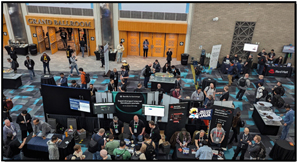
If you have followed my coverage of KubeCon over the past decade, you know that this is one of the events I look forward to most. I will, of course, be paying close attention to the technology, particularly how Kubernetes is being used to build and operate production AI infrastructure. Still, for me, KubeCon has always been about more than sessions and CNCF announcements. It is an event where I can walk around the show floor, bump into someone I have not seen in a year or even two, start talking about something technical and end up learning about an entirely different project. That interaction with the people who build and use this technology is a big part of why I am excited to be heading back to KubeCon.
 [Click on image for larger view.]
This article is a preview of what I expect to see in Salt Lake City. But first, I will look at how KubeCon has changed since I first started attending, what I expect to be important this year, some considerations for attending and, of course, why I am happy that the conference is returning to Salt Lake City.
Past KubeCons
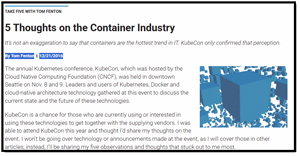
My first KubeCon was in Seattle in 2016.
 [Click on image for larger view.]
As I mentioned in my coverage of KubeCon North America 2025, the 2016 event feels almost like it happened at a different conference. I remember a few hundred people and only a handful of vendors. Kubernetes was already attracting attention, but it had nothing close to the enormous ecosystem surrounding it today. At that point, much of the conversation was still about containers, orchestration and figuring out what Kubernetes would become.
Over the years, KubeCon has grown exponentially, largely driven by Kubernetes adoption. What started as an event largely populated by developers and open source enthusiasts increasingly attracted enterprise architects, infrastructure administrators, security professionals and people like me who came from the virtualization and storage side of IT. That change has always interested me because it reflects what was happening in the industry. Kubernetes stopped being something developers were experimenting with, and Kubernetes became the infrastructure enterprises depend on to run their businesses.
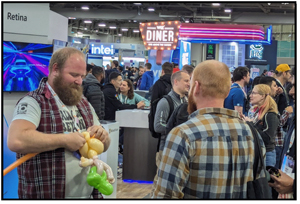
By the time I was covering KubeCon in Salt Lake City in 2024, the event's scale was dramatically different from the Seattle conference I remembered. The show floor had become a destination in its own right, with established technology companies standing alongside startups and open source projects. I particularly enjoy walking the floor and talking to smaller companies because many of the technologies that eventually become mainstream first show up as startups and projects at KubeCon.
 [Click on image for larger view.]
KubeCon 2025 in Atlanta demonstrated just how far the event and the technology had moved. The conference was celebrating the 10th anniversary of Kubernetes and the CNCF, and AI was impossible to ignore. Kubernetes has become an important part of the infrastructure conversation surrounding AI, rather than simply a platform for conventional cloud-native applications. My coverage of the event included everything from the co-located events on Day 0 to the keynotes and the growing convergence between Kubernetes and AI.
That evolution is one of the reasons I keep coming back. KubeCon is not a static conference where the same group of vendors comes back every year and gives essentially the same presentation. The center of gravity keeps moving. In 2016, I was trying to understand where Kubernetes fit into the infrastructure world. Today I am more interested in how Kubernetes fits into an infrastructure world increasingly dominated by AI, accelerators, platform engineering, security and increasingly sophisticated application architectures.
This Year's Event
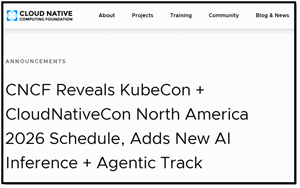
I suspect the biggest story at KubeCon North America 2026 will be AI. CNCF has introduced a new AI Inference + Agentic track that focuses on the challenges organizations face as they move AI from experimentation to production.
 [Click on image for larger view.]
That includes model serving, GPU scheduling, inference performance, observability and agentic workloads. Projects such as vLLM, KServe, Ray and OpenTelemetry are part of that conversation. This is an important distinction because the hard problem is no longer simply training a model. It is operating the infrastructure required to serve models reliably and efficiently at scale.
Platform engineering will also be a major theme. I have been watching platform engineering mature over the past several years, and I expect this year's sessions to focus less on whether organizations should build internal platforms and more on how to make those platforms useful to developers without adding another layer of operational complexity. Backstage, Argo and GitOps are examples of technologies that fit into this conversation. The interesting question for me is how these tools are being used in real enterprises rather than simply how they look in a demonstration.
Security remains another major part of the conference. CNCF will be highlighting supply chain security, identity, runtime protection, vulnerability management and policy enforcement. I also expect the differences between traditional and cloud-native infrastructure to become increasingly difficult to draw. VMware has been making a similar argument with VMware Cloud Foundation and VMware vSphere Kubernetes Service, in which Kubernetes is treated as another workload environment within a unified private cloud rather than an isolated infrastructure stack.
That is an area I will be watching closely because it connects directly with the infrastructure world I have spent much of my career covering. VMware's recent work around VKS also illustrates how the virtualization and Kubernetes worlds continue to converge. VMware's own coverage describes VKS as running on the vSphere Supervisor and inheriting infrastructure capabilities such as Memory Tiering. That does not mean Kubernetes has somehow replaced virtualization. Instead, it demonstrates how the two technologies can increasingly operate together.
Logistics
If you are considering attending KubeCon North America 2026, the basic schedule is straightforward. Nov. 9 is the day for co-located events, while the main KubeCon + CloudNativeCon conference runs Nov. 10-12. An All-Access pass includes access to the CNCF-hosted co-located events and the main conference. The current standard individual price is $978 for All Access and $679 for the KubeCon + CloudNativeCon only pass, with late pricing beginning Sept. 3. Salt Lake City sales tax is not included in those prices.
The conference is an in-person event. There is no virtual component this year, although breakout and keynote recordings will be made available through the CNCF YouTube channel after the event. For those traveling to Salt Lake City, the convention center is conveniently located near the airport and downtown hotels. The Salt Palace Convention Center is located in the heart of downtown, which makes it possible to walk to many hotels, restaurants and other attractions.
 [Click on image for larger view.]
I would also recommend booking a hotel sooner rather than later. KubeCon attracts a large crowd, and the Linux Foundation offers negotiated room blocks at several downtown hotels. One advantage of KubeCon being in downtown Salt Lake City is that several conference hotels are within easy walking distance of the Salt Palace where the event is held.
This Year's Event in SLC
I am particularly happy that KubeCon is returning to Salt Lake City. I wrote about this extensively before the 2024 conference because I have a personal connection to the area. I earned my undergraduate degree at Weber State University in Ogden, so Utah is a place I have known for a long time. When I wrote my preview in 2024, I pointed out that Salt Lake City combines a modern technology community with easy access to some of the most spectacular outdoor areas in the country. That has not changed.
Salt Lake City also works remarkably well as a conference destination, as it is a hub for many airlines and has direct flights from most major U.S. airports and a few international airports.
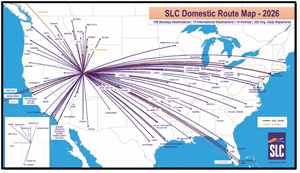 [Click on image for larger view.]
The downtown area is compact, the streets are laid out in a simple grid, and the Salt Palace is right in the middle of everything. There are restaurants, entertainment venues, museums and other attractions within walking distance of the convention center.
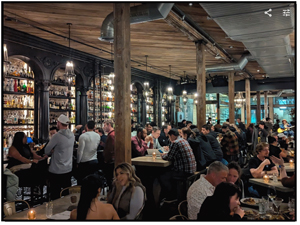 [Click on image for larger view.]
In my 2024 article, I also discussed the city's technological history and its reputation as part of Utah's Silicon Slopes. That combination of technology, outdoor recreation and a relatively easy-to-navigate downtown makes SLC a very different KubeCon destination from some of the enormous convention cities where the event has been held.
I also hope people take some time to get outside the city. I wrote another article in which I attempted to convince KubeCon attendees to extend their trip and not to spend their entire trip inside the convention center. Utah has an extraordinary amount to see, from the Wasatch Mountains and the Great Salt Lake to the state's national parks and other outdoor destinations. Obviously, not everyone will have the time to turn a technology conference into a road trip, but if you can add an extra day or two, it is worth doing.
Summary
KubeCon North America 2026 is going to be interesting for many reasons, but the thing I am most interested in is how the conversation has changed. Kubernetes has evolved from a relatively new container orchestration project into a foundational part of modern infrastructure. Now the community is trying to figure out how to use it to operate some of the most demanding AI workloads the industry has ever seen.
AI inference, agentic applications, platform engineering, security and infrastructure efficiency will dominate many technical conversations in Salt Lake City. I expect plenty of product announcements and vendor demonstrations, but I will be paying just as much attention to the conversations happening between the sessions.
That is what keeps me coming back to KubeCon. You can read announcements and watch presentations from almost anywhere. What you cannot reproduce from your home or office is walking into the convention center and running into people, meeting maintainers whose projects you have been following, discovering a startup that you have never heard of and having an impromptu conversation about where the industry is going.
For me, that is what makes KubeCon different. AI is driving change at an unprecedented rate, but so is the community building it. I look forward to seeing you in Salt Lake City this year at KubeCon 2026!
About the Author
Tom Fenton has a wealth of hands-on IT experience gained over the past 30 years in a variety of technologies, with the past 20 years focusing on virtualization and storage. He previously worked as a Technical Marketing Manager for ControlUp. He also previously worked at VMware in Staff and Senior level positions. He has also worked as a Senior Validation Engineer with The Taneja Group, where he headed the Validation Service Lab and was instrumental in starting up its vSphere Virtual Volumes practice. He's on X @vDoppler.