-

Gartner sees AI agents moving rapidly into industrial production, but its latest industrial AIoT research says operators remain wary of giving those agents unconstrained control over physical assets and safety-critical processes.
-

Our 1-person SOC from Down Under, Paul Schnackenburg, examines the reality behind AI-powered cyberattacks and Microsoft's Project Perception, a preview of agentic defenses for discovering, detecting, and remediating vulnerabilities.
-

The move gives the AI security effort neutral governance as it targets defenses spanning vendors, platforms, infrastructure and cloud environments.
-

By Tom Fenton
VMware Explore 2026 announcements show Broadcom expanding VMware Cloud Foundation into an AI-native private cloud spanning infrastructure, operations, security, agents and data.
-

A survey of 1,402-leaders suggests production agentic AI is pushing upgrades in infrastructure, governance, edge deployment and energy efficiency.
-

The 2026 Magic Quadrant for Enterprise Storage Platforms points beyond vendor rankings to a broader infrastructure shift driven by hypervisor changes, cloud-style consumption economics, surging hardware costs and AI.
-

By Tom Fenton
Tom Fenton previews KubeCon + CloudNativeCon North America 2026, where AI infrastructure, platform engineering, security and the cloud-native community will take center stage in Salt Lake City.
-

Nutanix Enterprise AI 2.8 adds agent governance and inference features, while Kubernetes Platform 2.19 is coming soon.
-

Verkada research finds cloud-managed physical security systems are far more likely to be running AI, while hybrid deployments still dominate the market.
-

Cloud Security Alliance's latest Top Threats report ranks identity first while adding two AI-related risks to its list of 11 leading cloud security concerns.
-

Survey respondents report outages, deployment delays and slow remediation as hybrid and multi-cloud policy management remains highly manual.
-

Microsoft is bringing five more Claude-native capabilities to Azure-hosted deployments, extending a pattern of accommodating Anthropic's models, APIs and agent tooling across Microsoft and GitHub products.
-

Carlos Rivas, an AWS-Certified DevOps Professional, cloud consultant, software developer and AWS instructor, outlined a staged approach to DevSecOps that distributes automated security checks throughout software delivery while warning that overly restrictive controls can create noise, bottlenecks and unofficial bypasses.
-

A Cloudera survey of 1,500 enterprise technology leaders found widespread AI-driven architecture changes, with governance problems, rising infrastructure costs and workload placement pushing organizations toward more hybrid approaches.
-

Nutanix has released an open-source Model Context Protocol server that lets AI assistants, including GitHub Copilot, interact with Nutanix Cloud Platform through Prism V4 APIs.
-

By Tom Fenton
VMware Explore 2026 will combine technical education on private cloud and private AI with hands-on learning, community networking and opportunities to reconnect with peers
-

Google joined Amazon and Microsoft in backing an open package format for portable AI-agent skills and MCP servers.
-

New offerings target cloud runtime defense, AI-agent identity, data control, exposure management and autonomous testing.
-

The Leader field changes little, but Gartner emphasizes AI-ready runtimes, governance, cost discipline and platform consolidation.
-

Official studies released around Black Hat document faster exploitation, identity abuse, cloud compromise, supply-chain risk and AI-assisted criminal operations.
-
By Tom Fenton
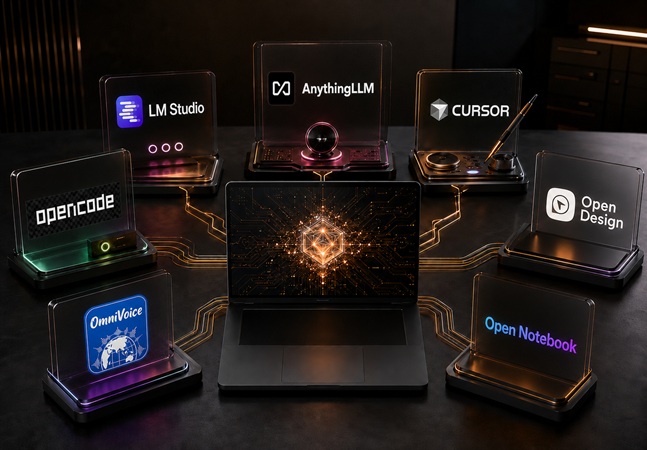
Tom Fenton tackles seven free and open-source AI tools bring local chat, coding, voice, design and research capabilities to personal computers and self-hosted environments.
-

The 2026 Threat Hunting Report traces a multiyear shift from conventional intrusions toward attacks that exploit trusted identities, cloud services, AI systems and software dependencies.
-
AI is accelerating attackers' ability to change infrastructure, tools and techniques, making durable behavior-based detection and broader visibility increasingly important to cybersecurity defense.
-

The July 29 releases expand Azure and identity protection, hypervisor coverage, enterprise application backup and long-term storage options.
-

Organizations using AI to compensate for limited IT staffing must treat the technology as a critical operational dependency, cloud and data infrastructure analyst Greg Schulz warned.